Hydrogeology in Christchurch
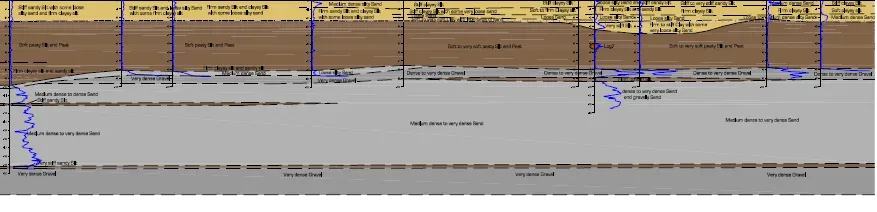
Beneath Christchurch lies a layered system of gravel aquifers, separated by finer confining beds and under artesian pressure, and it supplies most of the city’s drinking water. The aquifers are fed by rainfall on the Canterbury Plains and by seepage from the Waimakariri River, while closer to the surface a shallow water table feeds the springs of the Ōtākaro Avon and Ōpāwaho Heathcote rivers. Across the wider plains, nitrate from intensive land use is a recognised pressure on groundwater quality. Hydrogeology is the science of understanding how these systems work, and LDE provides it for projects in Christchurch and across Canterbury. We characterise aquifers and confining layers, build conceptual and numerical groundwater models, design and interpret pumping tests, and assess groundwater quality and contaminant movement. That work helps developers, landowners and public bodies protect the confined aquifers when they drill, pile or excavate, understand how a take or discharge affects neighbouring bores and springs, and give Environment Canterbury the technical evidence its rules call for.
Send a Message
Enquire about your Christchurch project
How LDE delivers hydrogeology in Christchurch
Protecting the confining layers is the central issue on many Christchurch sites. Deep piles, ground improvement, water bores and ground-source heat pump bores can each penetrate a confining bed and open a path between shallow, more contaminated groundwater and the drinking-water aquifers below, or let artesian water flow up around a casing. We review the local bore logs, map the confining layers and assess the risk before the design is fixed, then set out construction methods and monitoring that keep the layers intact.
It is the same hydrogeology capability behind our water and buildings work across New Zealand.
- Aquifer and confining-layer characterisation from bore logs and investigation drilling
- Conceptual and numerical models of groundwater flow and artesian pressure
- Pumping test design and interpretation for takes and ground-source heat pump systems
- Groundwater-quality assessment, including nitrate and contaminant plume studies
Groundwater management in Canterbury
Environment Canterbury manages groundwater takes, bores, discharges to land and the effects on springs and streams through the Canterbury Land and Water Regional Plan, which sets allocation and water-quality limits for each part of the region. New bores need a consent, and bore construction has to protect the aquifers it passes through. Christchurch City Council draws the city’s supply from these aquifers, so protecting source water around its wells is a consideration for nearby land use and discharges. We frame our investigations and models around those rules and national freshwater direction.
- Ministry for the Environment national direction on freshwater quality and allocation
- Taumata Arowai, the Water Services Authority source-water protection for community drinking-water supplies
LDE hydrogeology in Canterbury
The hydrogeology we provide in Canterbury follows the questions the region’s groundwater raises. Building and infrastructure projects in the city need confining-layer risk assessments before piling or ground improvement, and building owners need pumping tests and consent evidence for groundwater heating and cooling systems. Landowners and irrigators on the plains need assessments of how a new or increased take affects neighbouring bores and spring-fed streams. Where land use or an old industrial site threatens groundwater quality, we assess how nitrate or other contaminants move through the gravels and what that means for users downgradient. Clients include developers, engineers, farmers, industry and public bodies.
Common questions about hydrogeology in Canterbury
Why are Christchurch’s aquifers artesian?
Rain and river water soak into the gravels further inland, where no confining layer is present, and flow towards the coast beneath finer layers of silt, sand and peat deposited near the shoreline. Those layers hold the water under pressure, so a bore that penetrates them can flow at the surface without a pump. The same pressure is why a breached confining layer is hard to seal.
Can a ground-source heat pump use groundwater in Christchurch?
Yes. Open-loop systems are common in the central city. They take groundwater from one bore and return it through another, so they need consent for the take and the discharge, and the design has to show that the temperature change and drawdown will not affect other users. We design and interpret the pumping tests and model the thermal and pressure effects to support the application.
How does nitrate on the Canterbury Plains affect groundwater work?
Nitrate from intensive farming has raised concentrations in shallow groundwater in parts of the plains, and it moves with the groundwater towards deeper aquifers and the coast. Where a project involves a new take, a land-use change or a discharge to land, we assess nitrate trends, flow paths and travel times so the regional council and nearby users can see the effect.
Who leads LDE’s Canterbury hydrogeology work?
Hydrogeologists and engineers from our team, supported by LDE specialists nationally.