Water Services in Hamilton
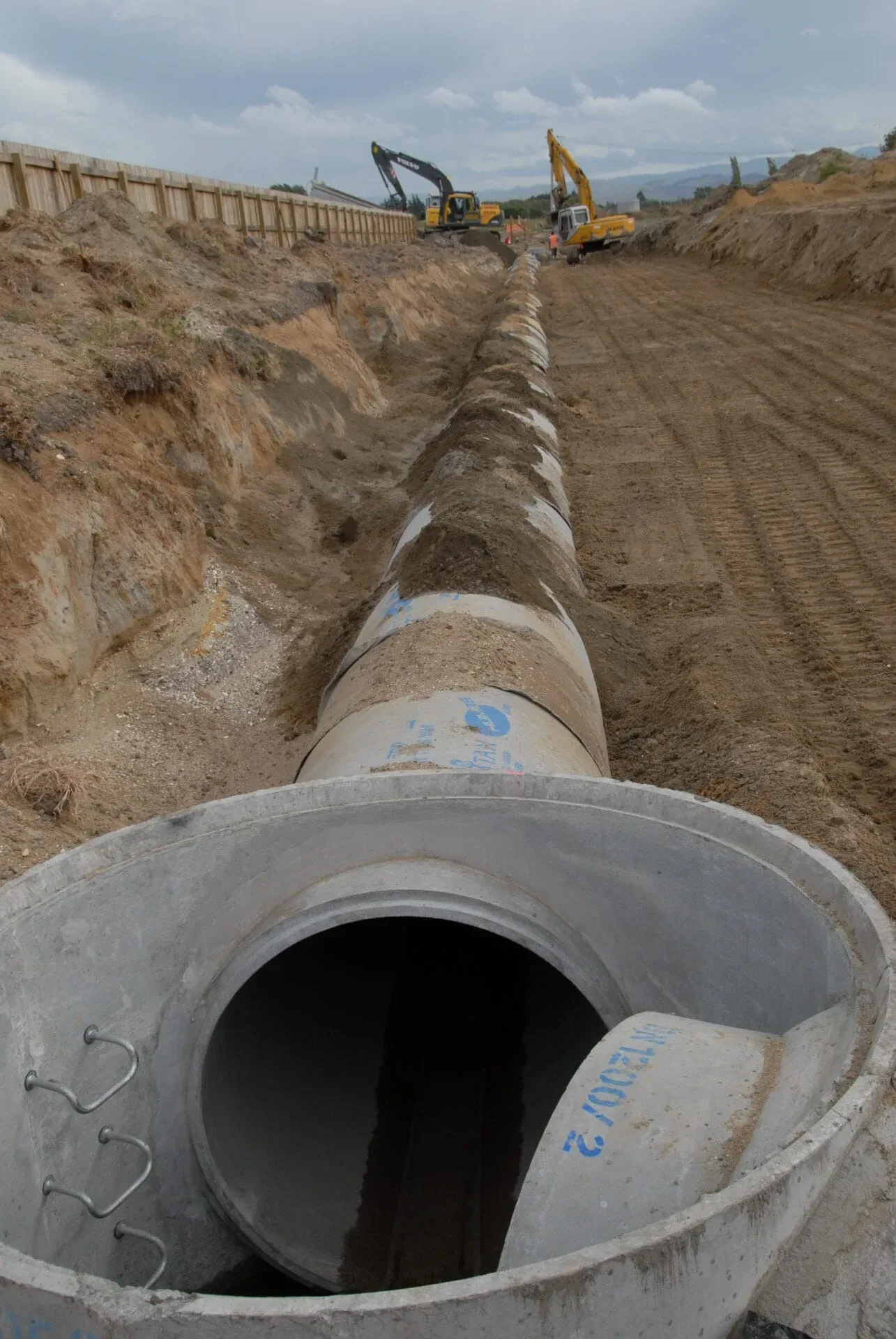
Hamilton takes its drinking water from the Waikato River and returns treated wastewater to it, which puts the river at both ends of the city’s water services. Growth at Rotokauri, Peacocke and Ruakura is extending networks into former farmland, the gullies that cut through the suburbs carry much of the stormwater, and soft peat under parts of the city settles under load and can pull pipes out of grade. Every consent affecting the river must also give effect to Te Ture Whaimana o Te Awa o Waikato, the Vision and Strategy for the river. LDE provides water services engineering for projects in Hamilton and across the Waikato, covering network and reticulation design, treatment, pump stations, capacity and renewals, and stormwater management and consenting. We design servicing for subdivisions and industrial estates, assess whether existing networks can take new connections, and set out stormwater treatment and outfalls that protect gully streams and the river. Our work helps developers, landowners and asset owners take three-waters infrastructure through council approval and regional consent with fewer late changes.
Send a Message
Enquire about your Hamilton project
How LDE delivers water services in Hamilton
In the Hamilton growth areas, network design starts with the catchment. Stormwater has to reach a gully, a stream or the river in a controlled way, so we lay out treatment devices and outfalls alongside the roads and lots rather than fitting them in afterwards. Where peat underlies a route we check the likely settlement and set pipe materials, bedding and grades so that sewers and stormwater pipes keep their fall. For wastewater the question is usually downstream capacity, and whether a pump station is needed before the trunk network reaches the site.
It is the same water services capability behind our urban development and resources and industry work nationally.
- Water supply and wastewater reticulation for greenfield growth areas
- Wastewater pump stations and rising mains ahead of trunk network extensions
- Stormwater treatment, detention and gully outfall design
- Capacity assessment for new connections and renewals planning for older suburbs
Water services consenting in the Waikato
New networks in the city are designed to the Regional Infrastructure Technical Specifications and approved for connection before they are vested, and Hamilton City Council decides the subdivision and land-use consents they serve. Waikato Regional Council consents stormwater and wastewater discharges, water takes and works in waterways under the Waikato Regional Plan. Because those discharges end up in the Waikato River, the application also has to show how the design gives effect to Te Ture Whaimana, and we treat that as a design input rather than a planning afterthought.
- Taumata Arowai, the Water Services Authority drinking-water standards and source-water rules
- Water New Zealand guidance on water, wastewater and stormwater network practice
LDE water services in the Waikato
Projects we take on in and around Hamilton range from whole growth cells to single connections. Developers at Rotokauri, Peacocke and Ruakura need staged reticulation, pump stations and stormwater networks that fit the council’s catchment planning. Industrial and logistics sites need trade waste assessment, large stormwater systems and fire-fighting water supply. Infill projects in older suburbs need capacity checks on pipes laid decades ago. Beyond the city, towns and rural developments across the Waikato need servicing where council networks stop, including on-site wastewater and stormwater soakage where the soils allow it.
Common questions about water services in Hamilton
How does peat affect water and wastewater pipes in Hamilton?
Peat is soft, compresses under new fill and structures, and keeps settling for years as it drains. A pipe laid through peat can lose its grade, so wastewater ponds in the line and joints crack. We identify peat along the route, estimate settlement with our geotechnical engineers, and choose materials, bedding and alignment that keep the pipe working.
Can stormwater from a development discharge into a gully?
Many Hamilton gullies already take stormwater and new outfalls are possible, but gully banks are steep and soft and erode quickly under concentrated flow. The councils expect runoff to be treated and the outfall designed to dissipate energy before it reaches the stream. We design the treatment, the outlet structure and any bank protection together.
Will a new Hamilton subdivision need its own wastewater pump station?
It depends on the land and on how far the trunk network has reached. Growth areas are serviced in stages, so an early subdivision may need a temporary or permanent pump station and rising main until gravity trunk mains arrive. We check the council’s servicing plans and the network capacity before settling on a layout.
Who leads LDE’s Hamilton water services work?
Chartered Professional Engineers from our team, supported by LDE specialists nationally.